CELEBRATING WOMEN’S HISTORY MONTH: A Tribute to Lorraine Hansberry and Ntozake Shange

Women’s history month is a time to acknowledge and celebrate the triumph and achievement of women of all backgrounds and from all fields, especially those who left us stronger, wiser and more resilient.

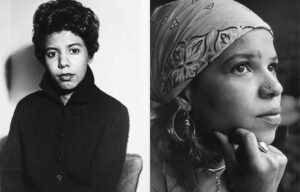
In the sphere of Broadway theater, I want to lift up two amazing and history-making Black women writers: Lorraine Hansberry and Ntozake Shange.

Lorraine Hansberry, born on May 19, 1930, was the author of the first play written by a Black woman to reach the Broadway stage. A Raisin in the Sun, her most celebrated work, debuted on March 11, 1959, when Hansberry was 28 years of age. The work reflected her strong personal commitment to social justice, perhaps inspired by her father who waged a landmark housing desegregation case in her hometown of Chicago in 1937. Hansberry saw art as a tool for social change and, although her life was tragically cut short at age 32 by pancreatic cancer, her commentary on American life as an artist remains poignant and insightful.

Ntozake Shange, born on October 18, 1948, is best known for her seminal play, for colored girls who have considered suicide/when the rainbow is enuf and the birth of a new theatrical art form, the choreopoem. As a child, Shange, was among the first Black students to integrate public schools in St. Louis, MO in the Fifties and the first Black student in Trenton, NJ to desegregate the advanced curriculum classes at the local public high school in the Sixties. Harkening Hansberry’s experience, Shange’s father, a general surgeon, had to institute a lawsuit in Trenton to gain admitting privileges at one of the local hospitals.

By high school, Shange started to show an interest in poetry and writing that would ultimately steer her into a life long career as a poet, playwright, essayist, performer and novelist. Her writing was personal, emotional and, similar to Hansberry’s work, steeped in her rich knowledge and understanding of place, history and people.

Seventeen years after Hansberry’s A Raisin in the Sun, Shange’s for colored girls hit the Broadway stage on Sept. 15, 1976. Her work was the second play by a Black writer to reach such lofty heights. Shange was then just 27 years of age.

Shange’s for colored girls exploded into the culture baring topics that until then had only been spoken about in hushed tones or behind closed doors.

Read more

Best Books of the Century:  ELLINGTON WAS NOT A STREET

April, 2025

Kirkus Reviews recently published a special issue dedicated to the best books of the 21st century (so far). Their staff selected 100 books in five categories, all published in the U.S. between 2000 and 2024. 

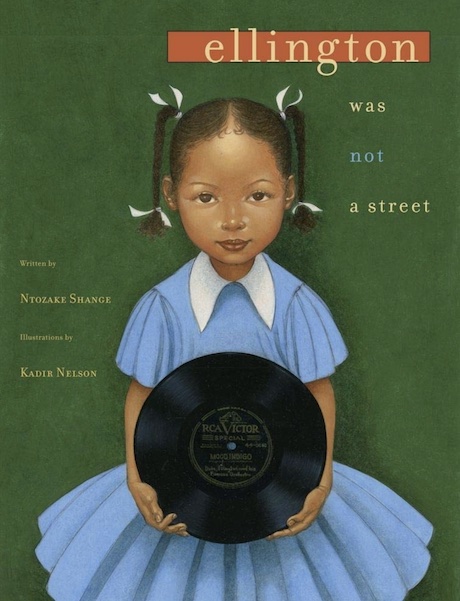
Selected for this august list in the category of Children’s Books you’ll find Ellington Was Not A Street, written by Ntozake Shange and illustrated by Kadir Nelson. This “exquisite” volume recounts in narrative and illustrations Shange’s memories of growing up in her ancestral home, where her mother and father often entertained notable figures from the arts, civic life and sports. It is a beautiful, tightly written, volume which provides parents reading with their children the opportunity to discuss the legacy of some of the great men of American history “who changed the world”. Learn more about Ntozake Shange at officialntozakeshange.com.


The Legacy of Ntozake Shange

Remembering Ntozake Shange: Lost In Language & Sound

For Black History Month, I’m celebrating the legacy of my late sister Ntozake Shange. Did you know that her classic play for colored girls who have considered suicide/when the rainbow is enuf is the longest running Broadway play by a Black playwright in the history of Broadway? Starting in September 1976, for colored girls ran for a record 742 performances, surpassing the record of 530 performances set in 1959 by the great Lorraine Hansberry’s A Raisin in the Sun.

But for colored girls was more than just a Broadway play. It was a true demarcation in cultural, literary and Broadway history. A cultural phenomenon that empowered women and disrupted what was then the standard concept of a play. Indeed, Ntozake coined her new art form a Choreo-poem, performative writing that blends poetry, dance, music and more. This new art form has found life in theater works and performances in our country and all across the globe.

Did you also know that Ntozake left a treasure trove of work including over 60 published works? A volume of her unpublished works, Sing A Black Girl’s Song, was published in 2022. While another book, Dance We Do, was also published posthumously in 2020.

One of her works I find to be surprisingly interesting and provocative, Lost In Language & Sound or how I found my way to the arts, is a collection of essays written by Ntozake and first published in 2011. You might think a series of essays about her life, her approach to her craft and ruminations on the development of for colored girls would be pedantic.

But you would be wrong. Lost In Language & Sound is a gorgeously written study of an artist’s self-reflection on family, art, history and just what it meant to her to be a part of a rich history and culture grounded in the arts and her blackness.

The audiobook version of Lost In Language & Sound is an absolute delight to hear aloud. You’ll
find that Ntozake‘s words inspire a different reaction from just reading them. The spoken word triggered new reminiscences and imagery for me that I didn’t experience with reading the written word alone.

So, if you are the least bit intrigued, I suggest pulling up a copy of Lost In Language &

Read more