
WOMEN’S HISTORY MONTH 2026 Celebrating The Legacy of Ntozake Shange
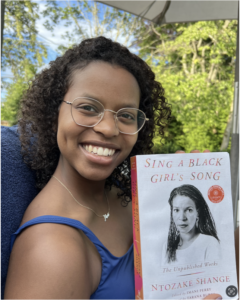
She wrote for all of us. For the creatives, the charismatics, the downtrodden, the cast-aside, the lovers, the dancers, the feelers, the healers. She wrote to anyone who has ever felt anything that made them feel like jumping up outta their bones.
With the 50th anniversary of the first Broadway production of for colored girls who have considered suicide /when the rainbow is enuf upcoming this year, I am honored to reflect on the legacy of my aunt, Ntozake Shange.
I was decades from existence when this work of art started to take shape. In New York apartments and Berkeley basements, in dialogue with her sister, Ifa Bayeza, a talented playwright in her own right, in dance improvisation with her beloved teacher, Diane McIntyre, and most crucially, in the intricate contours of Shange’s internal mind. It was her capacity for deep intellectual thought and her unyielding willingness to look at humanity with precision that made her a powerful storyteller. With each word, phase, rhythm, image, syncopated sound–she leaves us with something to think about/see/feel.
for colored girls came to Broadway in September 1976, making it only the second play by a Black woman to reach this milestone, after Lorraine Hansberry’s A Raisin in the Sun in 1959. I was born 21 years later in the city that is the backdrop for the original play: New York, New York. In the 1970s New York was gritty, menacing and electric at the same time (or, so I hear). There is something about the friction New York creates that allows for Shange’s characters to weave together – you do simply bump into people, and into tragedy, dancing, the funniest joke you’ve ever heard and the craziest person you’ve ever seen – all in a six block radius. And yet, it is both of significance and none at all that the play is set in 1970’s New York City.
Shange wrote both of a place and beyond the confines of place. When the lady in blue tells us
“i usedta live in the world, and now I live in Harlem,” she referencing a physical universe, a place, where we are all ‘trapped’ and the metaphorical box many survivors of violence feel they live within—one in which they are not free.
The way we write and think, what we read, how we consume information and ideas becomes more homogenous and ruled by artificial intelligence every day. Shange and for colored girls thrust us back into a real, heart-beating human world. A world full of nuance, heartache, pain, joy, love and sisterhood.
for colored girls is a play, a choreopoem, a manifesto, a yearning for freedom, and an ethnography. In every character there is something we each can hold on to–can look at and feel, hold in our hands, or massage in our minds,
CELEBRATING WOMEN’S HISTORY MONTH: A Tribute to Lorraine Hansberry and Ntozake Shange
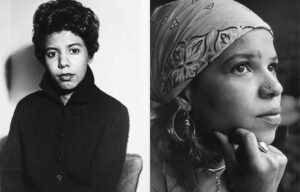
Women’s history month is a time to acknowledge and celebrate the triumph and achievement of women of all backgrounds and from all fields, especially those who left us stronger, wiser and more resilient.
In the sphere of Broadway theater, I want to lift up two amazing and history-making Black women writers: Lorraine Hansberry and Ntozake Shange.
Lorraine Hansberry, born on May 19, 1930, was the author of the first play written by a Black woman to reach the Broadway stage. A Raisin in the Sun, her most celebrated work, debuted on March 11, 1959, when Hansberry was 28 years of age. The work reflected her strong personal commitment to social justice, perhaps inspired by her father who waged a landmark housing desegregation case in her hometown of Chicago in 1937. Hansberry saw art as a tool for social change and, although her life was tragically cut short at age 32 by pancreatic cancer, her commentary on American life as an artist remains poignant and insightful.
Ntozake Shange, born on October 18, 1948, is best known for her seminal play, for colored girls who have considered suicide/when the rainbow is enuf and the birth of a new theatrical art form, the choreopoem. As a child, Shange, was among the first Black students to integrate public schools in St. Louis, MO in the Fifties and the first Black student in Trenton, NJ to desegregate the advanced curriculum classes at the local public high school in the Sixties. Harkening Hansberry’s experience, Shange’s father, a general surgeon, had to institute a lawsuit in Trenton to gain admitting privileges at one of the local hospitals.
By high school, Shange started to show an interest in poetry and writing that would ultimately steer her into a life long career as a poet, playwright, essayist, performer and novelist. Her writing was personal, emotional and, similar to Hansberry’s work, steeped in her rich knowledge and understanding of place, history and people.
Seventeen years after Hansberry’s A Raisin in the Sun, Shange’s for colored girls hit the Broadway stage on Sept. 15, 1976. Her work was the second play by a Black writer to reach such lofty heights. Shange was then just 27 years of age.
Shange’s for colored girls exploded into the culture baring topics that until then had only been spoken about in hushed tones or behind closed doors. Like Hansberry’s work, Shange’s play revealed a side of American life that was ‘hidden in plain sight’. Her revelations, poetic artistry and new art form that seamlessly featured poetry, dance and music, opened Broadway theater to new audiences, particularly Black women and the younger generation of the day. As a result, for colored girls stayed on Broadway for over two and one-half years, becoming the longest running Broadway play by a Black writer,
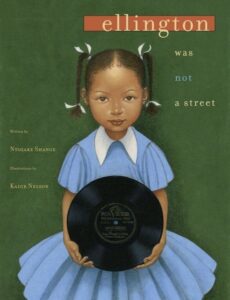
Best Books of the Century: ELLINGTON WAS NOT A STREET
April, 2025
Kirkus Reviews recently published a special issue dedicated to the best books of the 21st century (so far). Their staff selected 100 books in five categories, all published in the U.S. between 2000 and 2024.
Selected for this august list in the category of Children’s Books you’ll find Ellington Was Not A Street, written by Ntozake Shange and illustrated by Kadir Nelson. This “exquisite” volume recounts in narrative and illustrations Shange’s memories of growing up in her ancestral home, where her mother and father often entertained notable figures from the arts, civic life and sports. It is a beautiful, tightly written, volume which provides parents reading with their children the opportunity to discuss the legacy of some of the great men of American history “who changed the world”. Learn more about Ntozake Shange at officialntozakeshange.com.
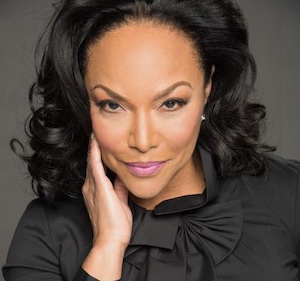
Lynn Whitfield Reflects On Her Career Ahead of the Prince George’s Film Festival
Acclaimed actress Lynn Whitfield is headlining the Prince George’s Film Festival’s closing ceremony at MGM National Harbor.
In this article, she reflects on her career from her childhood influences to her college years at Howard University, her early experiences in the D.C. Black Repertory Company, and her breakthrough stage performance with Alfre Woodard in “for colored girls who have considered suicide / when the rainbow is enuf.”
Read it here.
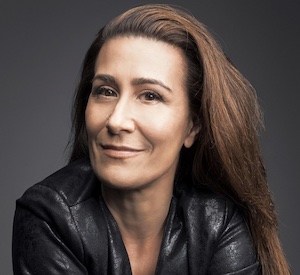
Musical theater lecturer Jeanine Tesori on imperfect music and living in an empty lighthouse
Jeanine Tesori, a lecturer of musical theater composition at Yale’s Department of Music, has written four Tony-nominated Broadway scores — “Twelfth Night at Lincoln Center,” “Thoroughly Modern Millie,” “Caroline” and “Shrek the Musical” — in addition to two Tony-winning scores — “Fun Home” and, most recently, “Kimberly Akimbo,” a musical about a lonely teenage girl who suffers from a condition that gives her the appearance of an elderly woman.
As a teacher, Tesori encourages her students to embrace their inherited musical gifts, a lesson inspired by the oral music traditions of folk music. On the first day of classes, Tesori always poses a question to her students: “Who are you bringing into the room with you?”
“To Natalie Brown ’25 and many other students, Tesori is a “fairy godmother” of sorts. Brown, who is a singer-songwriter in addition to being a full-time student, first encountered Tesori while taking “Advanced Composition for Musical Theater.”
When Brown wrote an adaptation of Ntozake Shange’s “For Colored Girls Who Have Considered Suicide,” Tesori helped Brown contact the estate of Shange and put her in touch with WME, Brown’s current agency.”
Read more here.
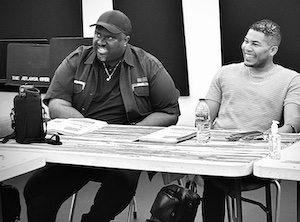
“Passing Strange” director Thomas W. Jones II talks about mothers, sons, finding the truth in music
Tony-award winning “Passing Strange” is a rock musical that explores the journey of Youth, the main character, as he runs from his upbringing in a Black, middle-class family in Los Angeles to Europe in search of his true self, delving into the tension between conservative Black middle-class values and the desire for authenticity and self-expression, highlighting the ridicule and struggle faced by those who don’t conform.
In this article, the play’s director, Thomas W. Jones II, explains his thoughts on the play’s themes, and the role of music as a source of revelation and salvation, providing a connection to one’s truth.
Read more here.

Department of Black Studies Welcomes New Faculty
Jordan Ealey and Philip V. McHarris bring their scholarly expertise in Black creativity and Black geographies to Rochester.
More information here.
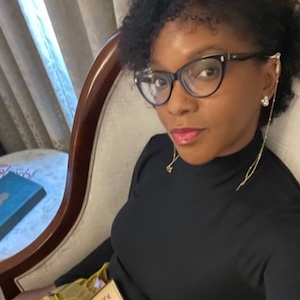
Imani Perry’s Arrival Marks A Homecoming
GAZETTE: Tell me about the book you just edited, which is due out in September.
PERRY: I was fortunate to be asked by Hachette and the Ntozake Shange estate to edit a collection of her unpublished writing. Even though Shange was so prolific, and published so much, there was still this beautiful body of material the world hadn’t seen yet.
In so many ways she followed [“A Raisin in the Sun” playwright] Lorraine Hansberry in opening doors for Black women in American theater. That felt like a wonderful connection. I also remember being in Cambridge as a kid, and my mother would always perform the Lady in Green character from [Shange’s 1976 play] “for colored girls [who have considered suicide / when the rainbow is enuf]” at parties and the like.
More information here.
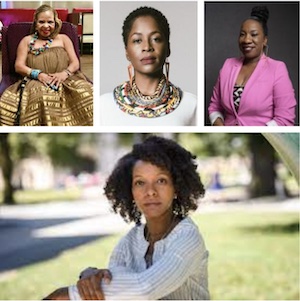
Wisconsin Book Festival event highlights the Ntozake Shange collection
The Wisconsin Book Festival is soon approaching and Madison Public Library in partnership with Madison Public Library Foundation is getting ready for the Oct. 19-22 dates by hosting exciting events to lead into the literary celebration.
For poetry and Black literature fans alike, an upcoming online event centering Ntozake Shange’s new posthumous collection called “Sing A Black Girl’s Song” will be offered free to the public on Sept. 20, 7 p.m., on Crowdcast.
The collection included unpublished poems, essays, and plays that explore experiences both as a Black woman in America, and as a human in the grand scheme of existence. Shange uses her voice and writings as a way to share an often underrepresented perspective while providing space for fellow Black women to be seen and undertake the journey of healing.
The Chicago Reader’s dramatic top ten for fall
For Black Boys Who Have Considered Suicide When the Hue Gets Too Heavy, by Ryan Calais Cameron
Nominated for best new play at the 2023 Olivier Awards. Father figures and fashion tips. Lost loves and jollof rice. African empires and illicit sex. Good days and bad days. Six young Black men meet for group therapy, and let their hearts—and imaginations—run wild. Inspired by Ntozake Shange’s essential work for colored girls who have considered suicide / when the rainbow is enuf, For Black Boys Who Have Considered Suicide When the Hue Gets Too Heavy is a profound and playful work of drama.
Full list here.